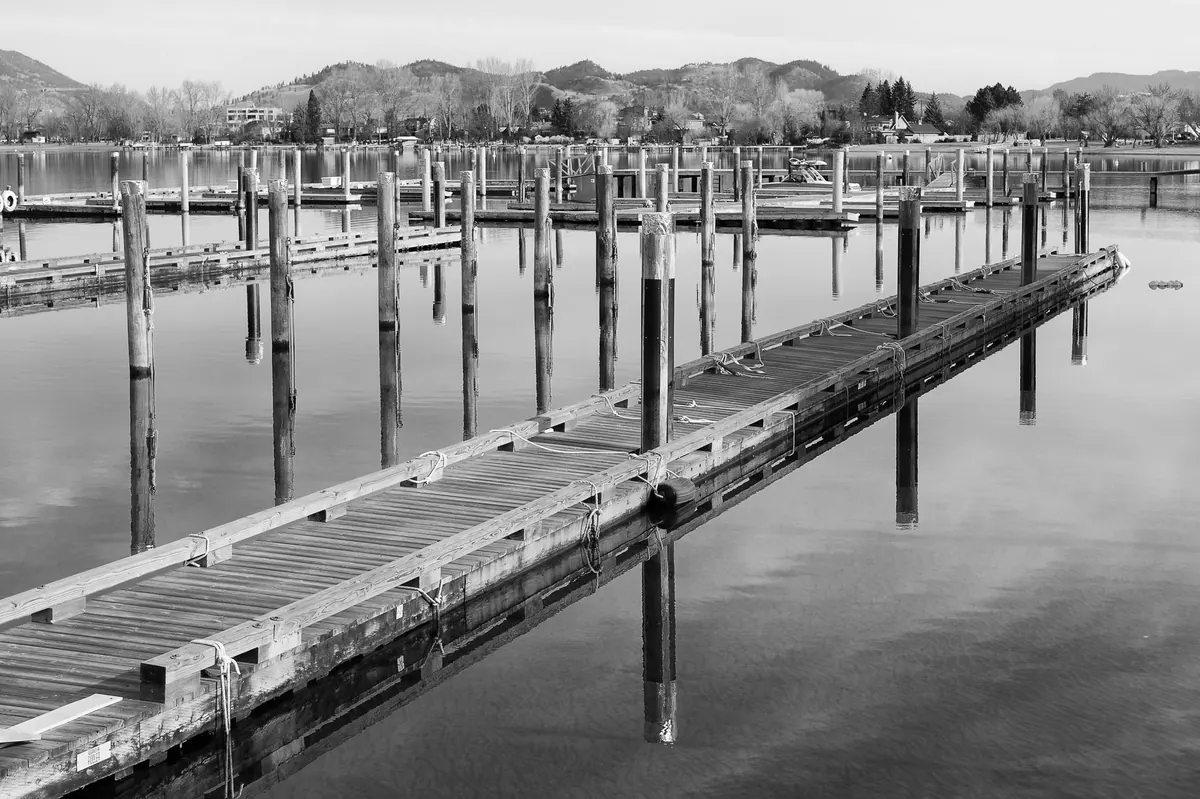
A dock changes how you use a shoreline. The boat lives where the water is, kayaks launch after dinner, and guests arrive by water instead of by driveway. It also adds a long list of things that can fail in weather you did not choose. Most first-time dock owners learn the same lessons the same way: on a windy Tuesday in June, with a line in the water and a fender drifting past the ladder. The mistakes below come up again and again. None are exotic, and every one of them is cheaper to prevent in April than to repair in August.
Sizing hardware for the calmest day of the year
Hardware rarely fails on a flat, quiet afternoon. It fails when a gust catches a boat broadside and every cleat, bolt, and piling has to hold more than you pictured. The usual error is scaling hardware to the boat's weight instead of to the load wind and waves put on it, which is why a light boat with a tall cabin can pull harder than a heavier open boat.
Check these before the season starts:
- Cleats long enough for the dock lines the boat actually uses — read the manufacturer's spec for line diameter instead of guessing
- Through-bolted connections with backing plates, not lag screws driven into wood that stays wet
- Stainless fasteners in salt water, hot-dip galvanized in fresh; mixing metals invites corrosion
- Pilings driven deep enough for your soil and wave exposure, not just below the mud line
If you are unsure, ask a local dock builder what holds up on the same water. They know the fetch, the ice, and the bottom.
Skipping the permit, then discovering the setback
Shoreline rules are local, and they are stricter than most new owners expect. A permit may be required for the dock itself, for the pilings, for dredging, and sometimes for the boat lift or the path down to the water. Setbacks from property lines, limits on how far a structure can extend into the water, and protections for vegetation or submerged habitat all show up in the paperwork.
Owners who build first and ask later usually pay twice: once for the dock, and again to modify or remove it. Before you buy a single piling, call the county or state office that handles shoreline permits and ask what applies to your address. If the project touches the waterbed or wetlands, or if your deed's riparian rights are unclear, bring in a local attorney or surveyor. That is a professional question, not a neighbor's opinion.
Mooring with one line and a hopeful attitude
A single bow line and two fenders will hold a boat on a still day. At a private dock, the goal is keeping the boat off the structure through wind shifts, wakes, and tide.
Use four lines when you can: bow, stern, and two spring lines running fore and aft. The springs stop the boat from surging into the dock when a wake rolls through. Set fenders so they sit between the hull and the dock edge at the rub rail, not floating uselessly above it, and readjust them once you see how the boat sits with a full fuel tank and a full cooler aboard.
Chafe is the quiet killer. Any line rubbing a chock, a piling, or a rough edge will fray, and a frayed line parts without warning. Add chafe guards where lines pass through hardware and check them after every blow.
In tidal water, leave slack for the full range. A line that is snug at low tide will be bar-tight at high tide, and something has to give — usually a cleat or the hull.
Electrical work that fails quietly
Water and household wiring are a bad combination, and docks attract both. The mistakes repeat: extension cords run out to the boat and left lying on wet decking, power strips daisy-chained under a lift canopy, connections wrapped in tape instead of proper enclosures, and outlets with no ground fault protection.
- Ground fault protection on dock circuits, tested monthly
- Marine-rated cords and connectors, with a drip loop so water cannot run into the plug
- Cords and connections kept off the deck and out of the water
- Sealed junction boxes, and no household extension cord used as permanent wiring
- Bonding systems checked for corrosion and loose connections
Dock wiring is one of the few jobs worth hiring out entirely. Bring in an electrician who has worked on waterfront systems, and expect the work to be inspected where your jurisdiction requires it. Saving money here can hurt someone in the water.
Waiting until the ice arrives to think about ice
Ice does not just sit there; it expands, shifts, and lifts. Piles get jacked upward, dock sections twist, and a run that survived ten summers can be wrecked in one hard freeze.
What works depends on your water body. On northern lakes, many owners pull the dock, or at least the ramps and accessories, before the first hard freeze. Where ice stays milder, a de-icer or bubbler can hold a pocket of open water around pilings and a lift. Read the local rules first, since some lakes restrict them, and remember they only help if the circulation reaches the right spots. On tidal rivers, ice moves with the current, so a dock that can rise and fall without being pinned is safer than one locked rigid.
Whatever you choose, plan it in October. The day before the freeze is no time to find a rotten piling or a missing section.
Treating the dock as finished once it is built
Every dock is a maintenance item with a view. Wind loosens bolts, sun dries decking, and wood near the waterline rots from the inside out.
A short walk-around once a month catches most problems while they are small. Wiggle the railings, cleats, and lift posts. Look for rust streaks; they point to failing fasteners. Press decking for soft spots and probe pile tops for dark, crumbly wood. Replace missing sacrificial anodes on metal docks and lifts. Clear debris from under the dock before it traps water against the structure.
Keep a bucket of spare bolts, washers, and line on the dock. Repairs go faster when you are not driving to the hardware store mid-weekend.
Getting the first season right
None of this requires a marine engineer. It requires treating the dock as part of the boat's system rather than as furniture at the water's edge. In your first season:
- Confirm what your permits and property allow before adding anything.
- Size hardware and lines for storm load, and inspect them after every hard blow.
- Use four lines, chafe protection, and fenders set at the rub rail.
- Have a qualified electrician handle and inspect anything carrying current near the water.
- Write an ice plan in the fall and make a maintenance walk part of your routine.
Do those five things and the dock becomes what you wanted: a place to step off the lawn and onto the water, season after season.
Photo: Pexels / Pixabay